Alejandro Almanza Pereda on De esos polvos estos barros


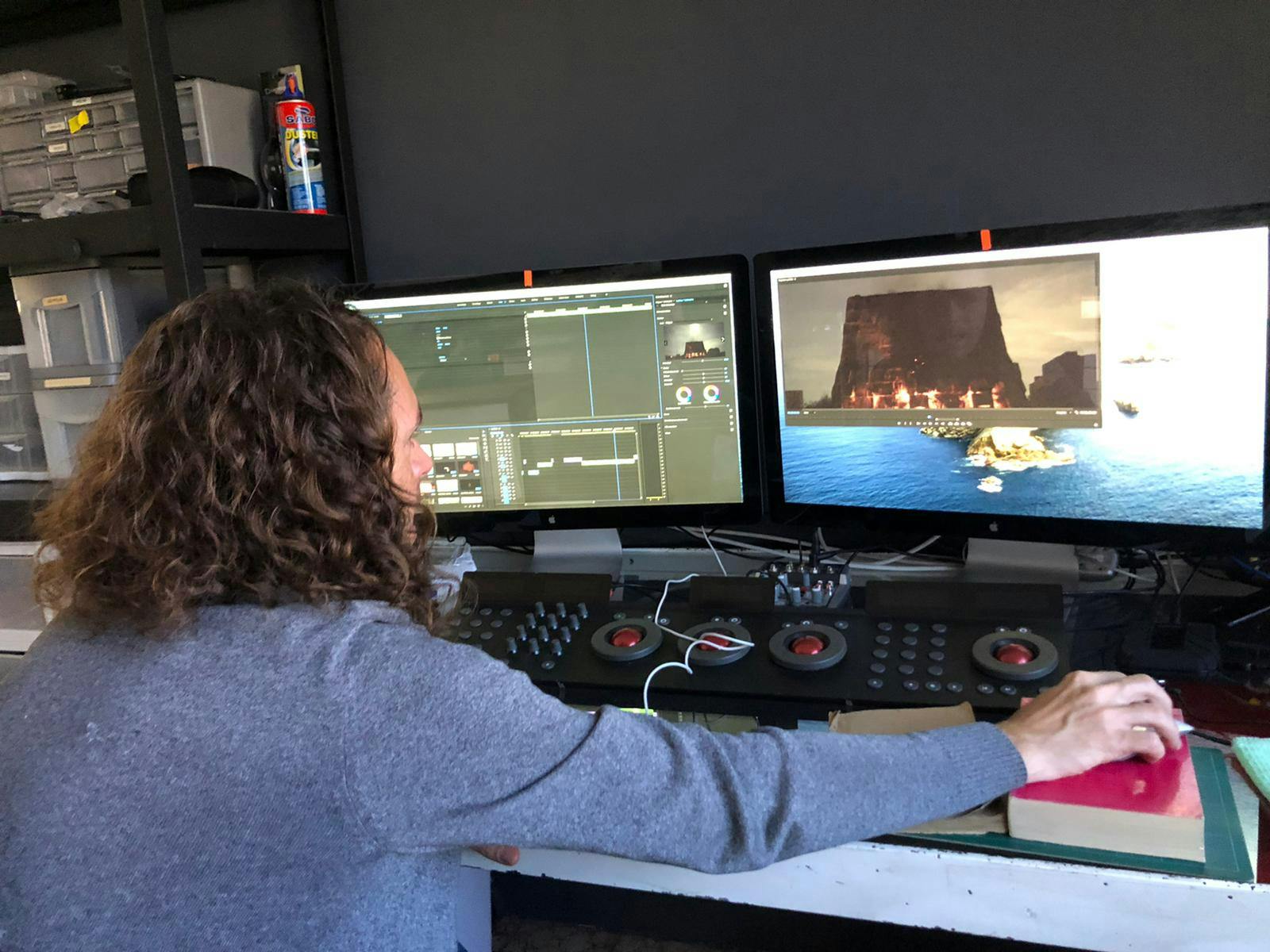
On the occasion of BLACK CUBE SHORTS, Black Cube presents the following edited transcript of a conversation between curator José Esparza Chong Cuy, Executive Director and Chief Curator of Storefront for Art and Architecture, and artist Alejandro Almanza Pereda.
Originally recorded in 2021 to mark the online release of Almanza Pereda's film De esos polvos estos barros, this exchange offers insight into the artist’s material-driven practice and his exploration of the brick as both subject and protagonist. Reflecting on processes of making, unmaking, and transformation, the conversation traces the cultural, ecological, and temporal dimensions embedded in artisanal brick production, while foregrounding broader questions about labor, authorship, and the life cycles of objects. The transcript has been lightly edited for clarity and length.
Alejandro Almanza Pereda on De esos polvos estos barros
José Esparza Chong Cuy: Your recent film, De esos polvos estos barros, looks into the lifespan of the brick. Would you mind telling us a little bit about the title of this film?
Alejandro Almanza Pereda: This title comes from a Spanish phrase, which literally translates into English as “from those dusts, these muds.” It’s a saying about how certain acts lead to certain consequences.
JECC: Can you share a little bit about how and why you decided to work on a film that follows, in such detail, the process of how a brick is made?
AAP: My practice comes from my childhood. My father is an engineer and my uncles are architects. Growing up, I spent time in the obras negras, what they call construction sites in Mexico. For me, these construction sites were way better than amusement parks. It was interesting to see all their happenings, all the raw materials, and how people work with their bodies.
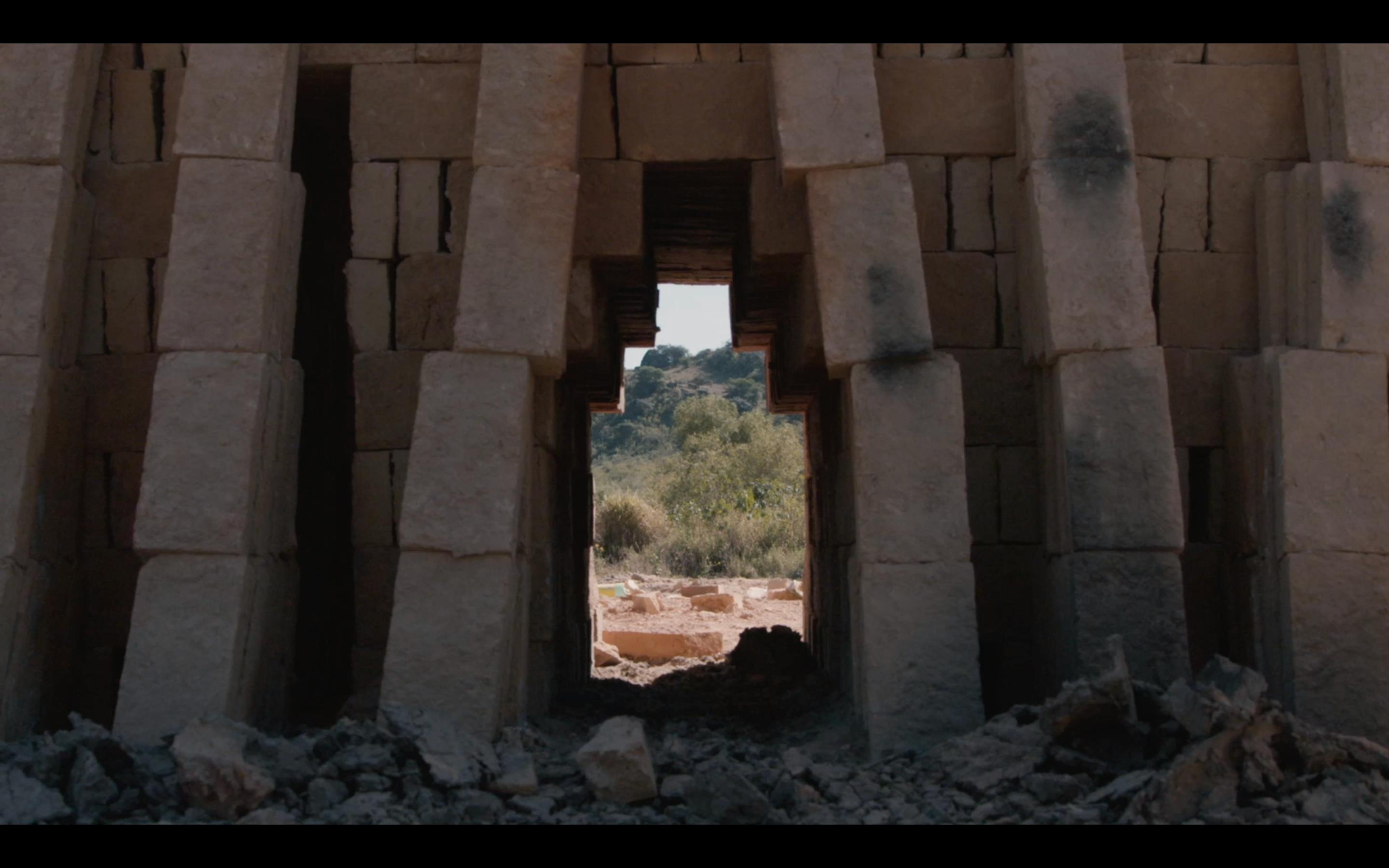
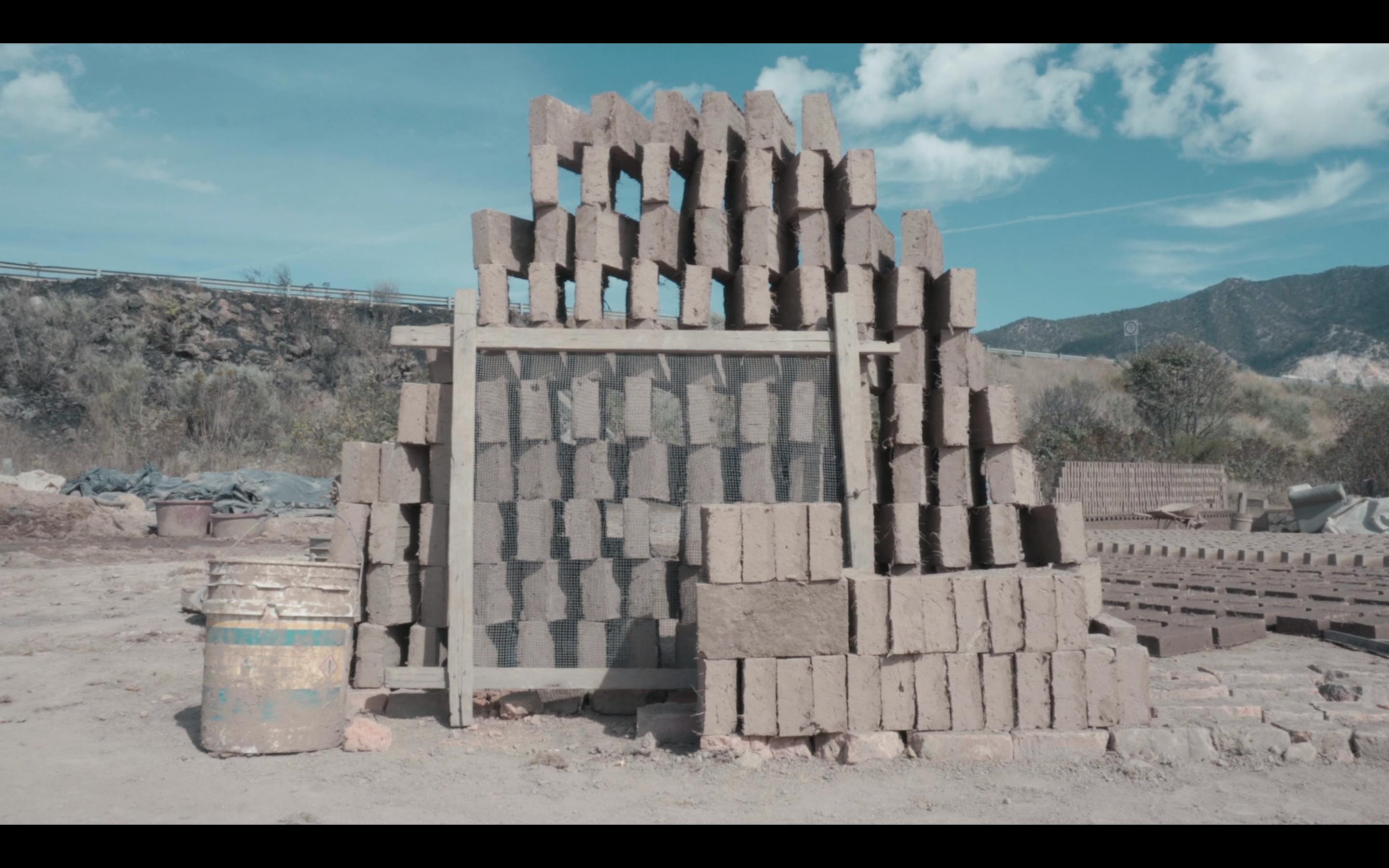
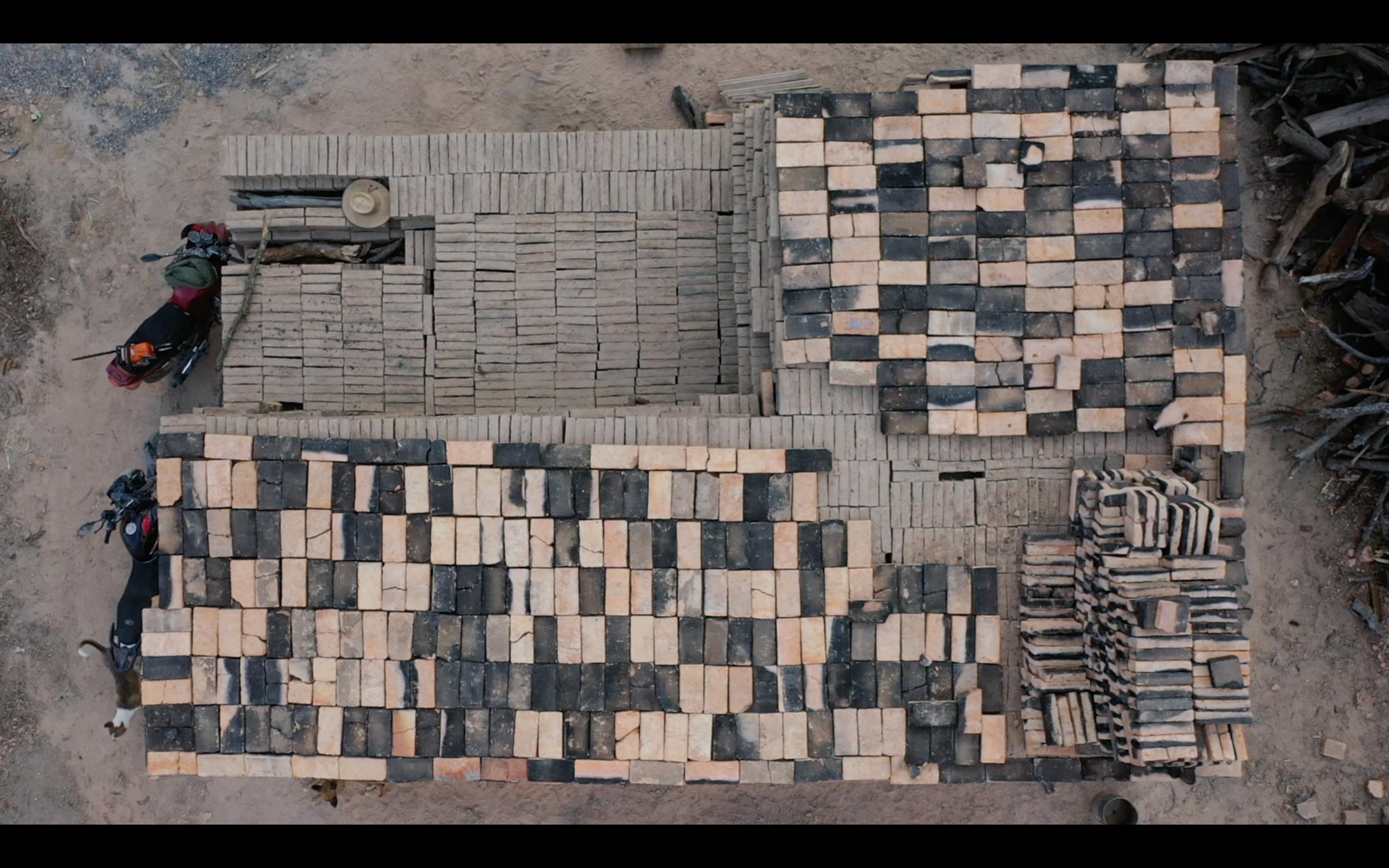
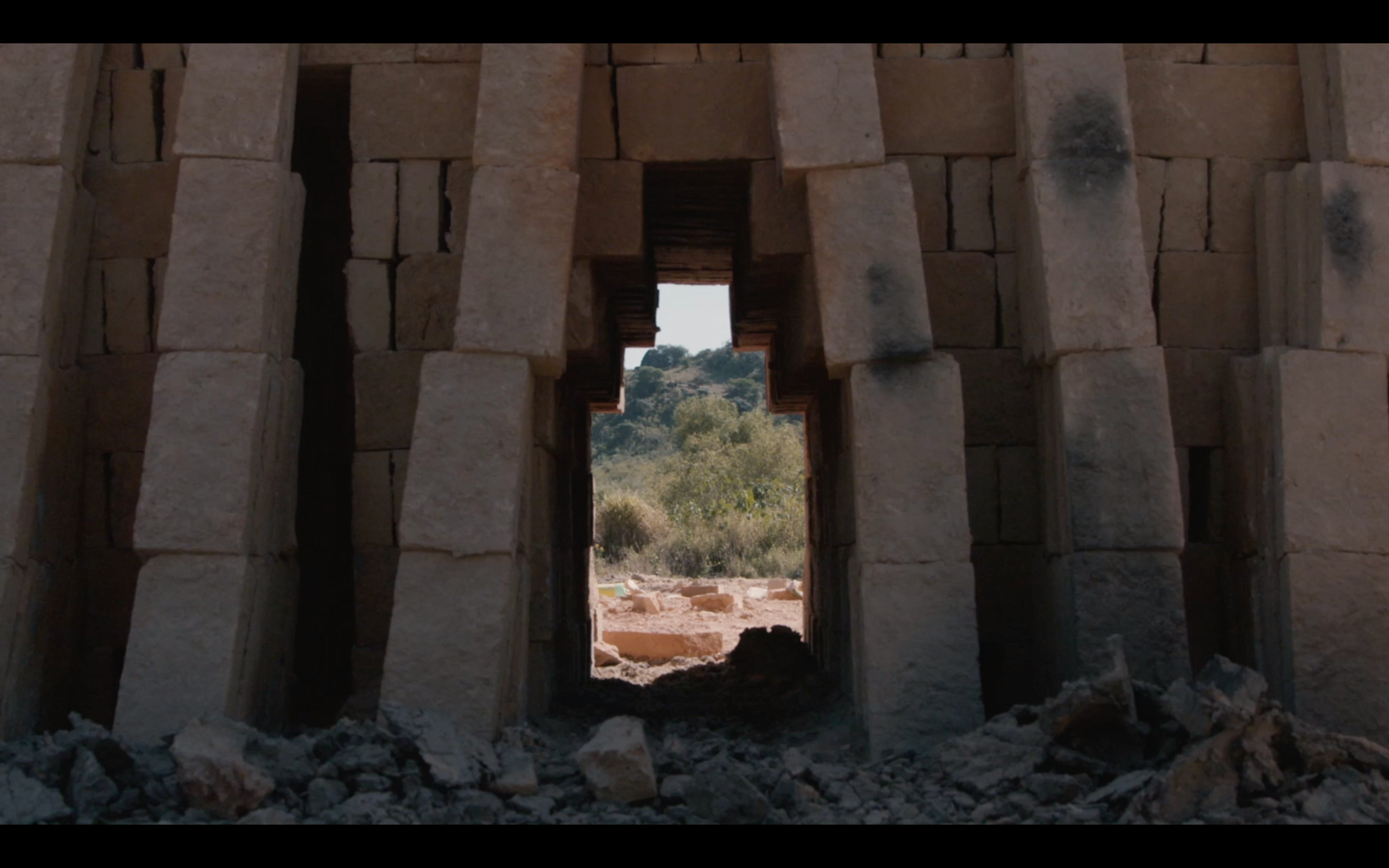
In my sculptural venture, I've been really interested in Las Trincheras—these structures people build by stacking bricks, like a proto-pyramid or proto-ziggurat. They use two keystones to keep the stack nicely packed, so wind or movements won't disturb the bricks. In Mexico, these structures are an omen for a new construction site. They tell you that soon, there’s going to be a house here. You see them everywhere.

JECC: I love this idea of the Trinchera and how it is somehow an announcement of something that's to happen, even though they are temporarily laid out for the drying process of the brick. It's not necessarily that a structure will be built there, but it's almost as an announcement for something that's to come. That is connected to the title of the film itself.
Your film includes zooms and pans of the brickmaking process, following how bricks are made. But it was also revealing that you decided to focus mainly on the brick itself. While you do give hints of a life around it, it's never clear where exactly the film is shot. It's never clear who the people behind it are. You can see, of course, some hands. There are some hints and details across the film that make it somewhat obvious, at least for you and me, who are Mexican, that the film was shot in Mexico. But it’s never explicit. Would you mind telling us a little bit about why you decided to abstract the film and make the brick your protagonist?
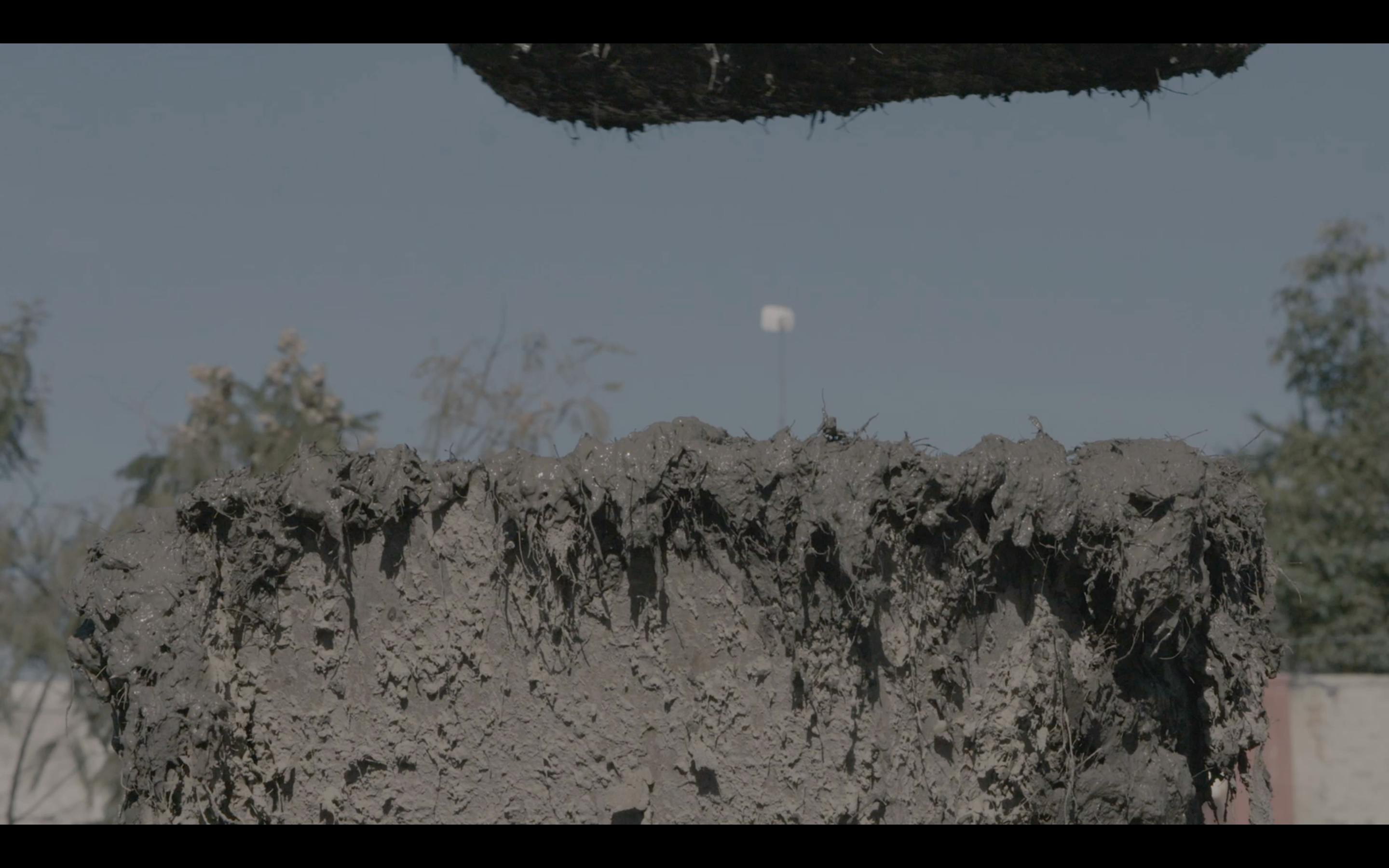
AAP: I don't consider myself a filmmaker. I'm more an artista plasticó, a “plastic artist.” I focus on materials. I really wanted to do shots that close in on the material, which mirrors my larger practice, where I've been really focused on objects and their lives while taking the master of the object away.
It was hard to take away the human form. But I think sometimes you need to stick to your guns and just say, "You need to really focus on what you come from." We had many shots of the community and the town, including interviews. I was so close to changing the entire film into a social documentary about the people working and living in Magdalena. But my first intention, and I think I followed it, was to focus on the material itself.

JECC: You followed your gut intuition of documenting and registering the process of how the material is made. There's something quite beautiful about that, because you're creating this archive or document of how this very artisanal material is made. Of course, there is the possibility that the way this brick is done, at least in towns like Magdalena, will eventually stop existing, with industrialization and new technologies.
AAP: I had local brickmakers approach me and ask, "Why you are interested in this? Why you bring all these cameras and shoot this?" For me, it's art. This is an amazing technique that I have not seen in other parts of Mexico.
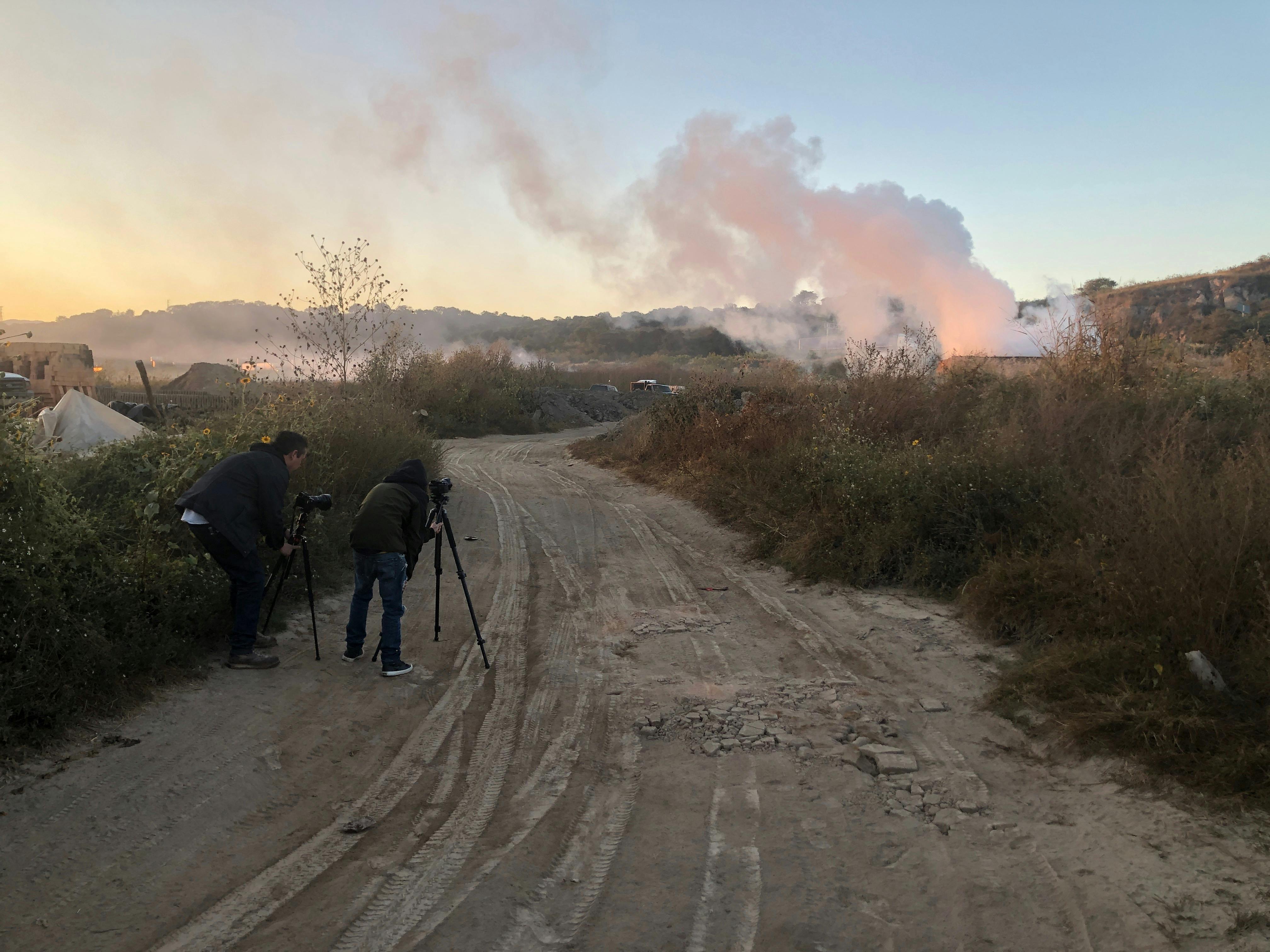
The Mexican government has been trying to ban this way of brick making because of the pollution. Instead, they’re starting to rely on machines that can make a thousand bricks per minute. The brick makers in Magdalena were not concerned at all, however. They told me, "Well, they want to help us to make more bricks." But I’m left wondering what's going to happen to the craft and these people's jobs. We'll see what happens to the industry.

JECC: Tell us more about Magdalena and its brick making history.
AAP: Magdalena used to be the second-biggest body of water in Mexico. It was formerly a lagoon that got dried up by the Spanish. It was completely gone by the beginning of the twentieth century. Interestingly, the land it left behind created a kind of clay that is perfect for brick. So that's why there's a lot of brick making in Magdalena.
The kilns they have in Magdalena are temporary. The same brick that’s used for one thing might be the same brick that’s used for another. Structures are built with brick and then taken apart. I showed this process to people in other places in Mexico, and they said, "Why'd they do that? They should just build static, permanent walls and just keep it there." But for me, it was beautiful to see, this process of making from the ground and then returning back to the ground again.

JECC: Yeah. There are these temporary architectures that are built to serve one specific function, and once they're done with that function, they're disassembled. There's a continuous construction and demolition that you show in your film, going from built architecture to something that looks almost abandoned.
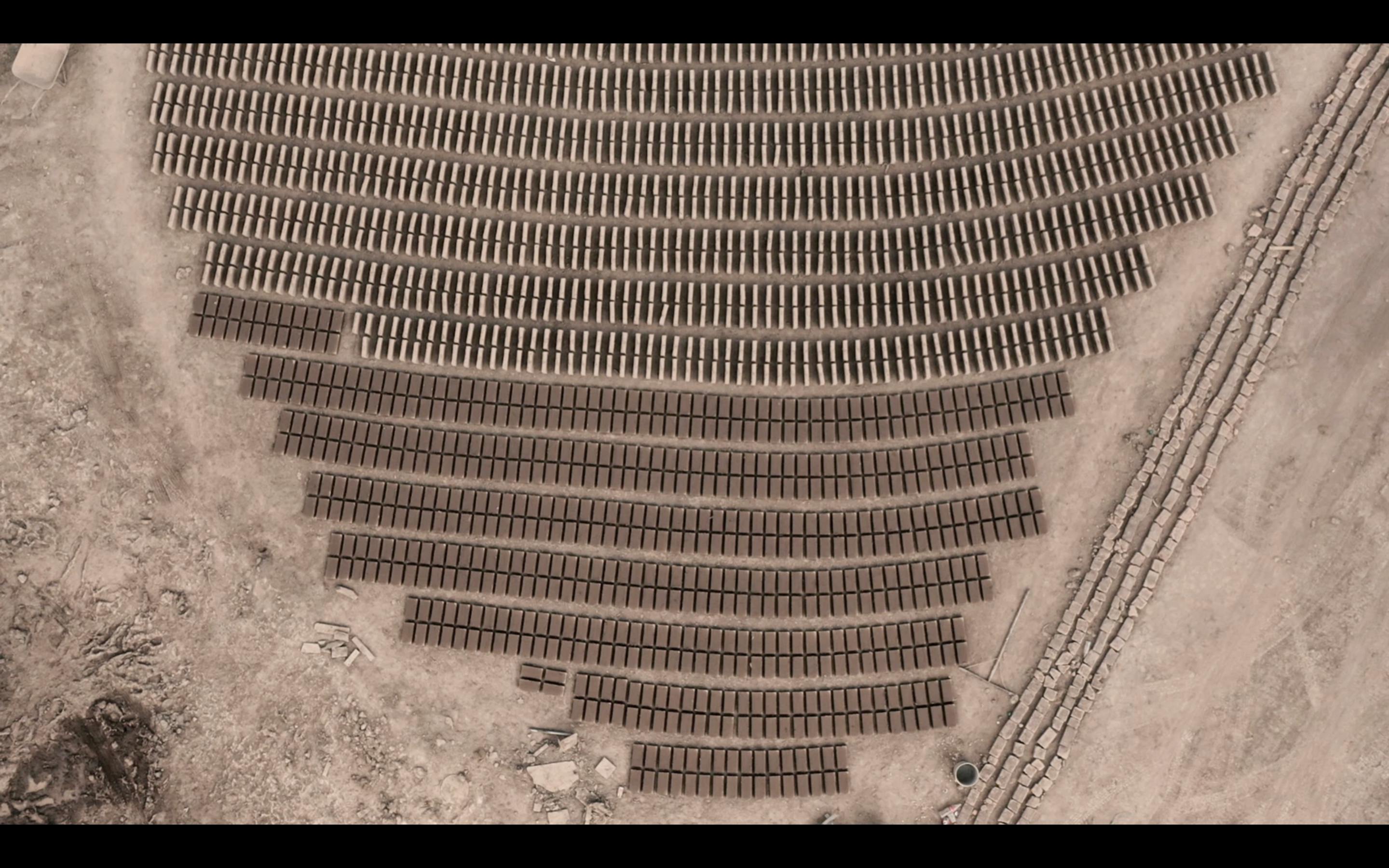
AAP: I learned so much from being in Magdalena. Just looking at fields of bricks, it was interesting to see how similar yet different each brick is. You cannot say that one is exactly the same as another. But it’s interesting to think about how these bricks moved from one structure to another, with all these past lives.

JECC: De esos is presented almost like a documentary. But there's certainly a lot of artistic intention in the film, and it's not necessarily narrative nor linear. But you can tell that you're treating your protagonist, the brick, through the lens of a plastic artist, as you described earlier. It'd be great to hear your process working around these boundaries.
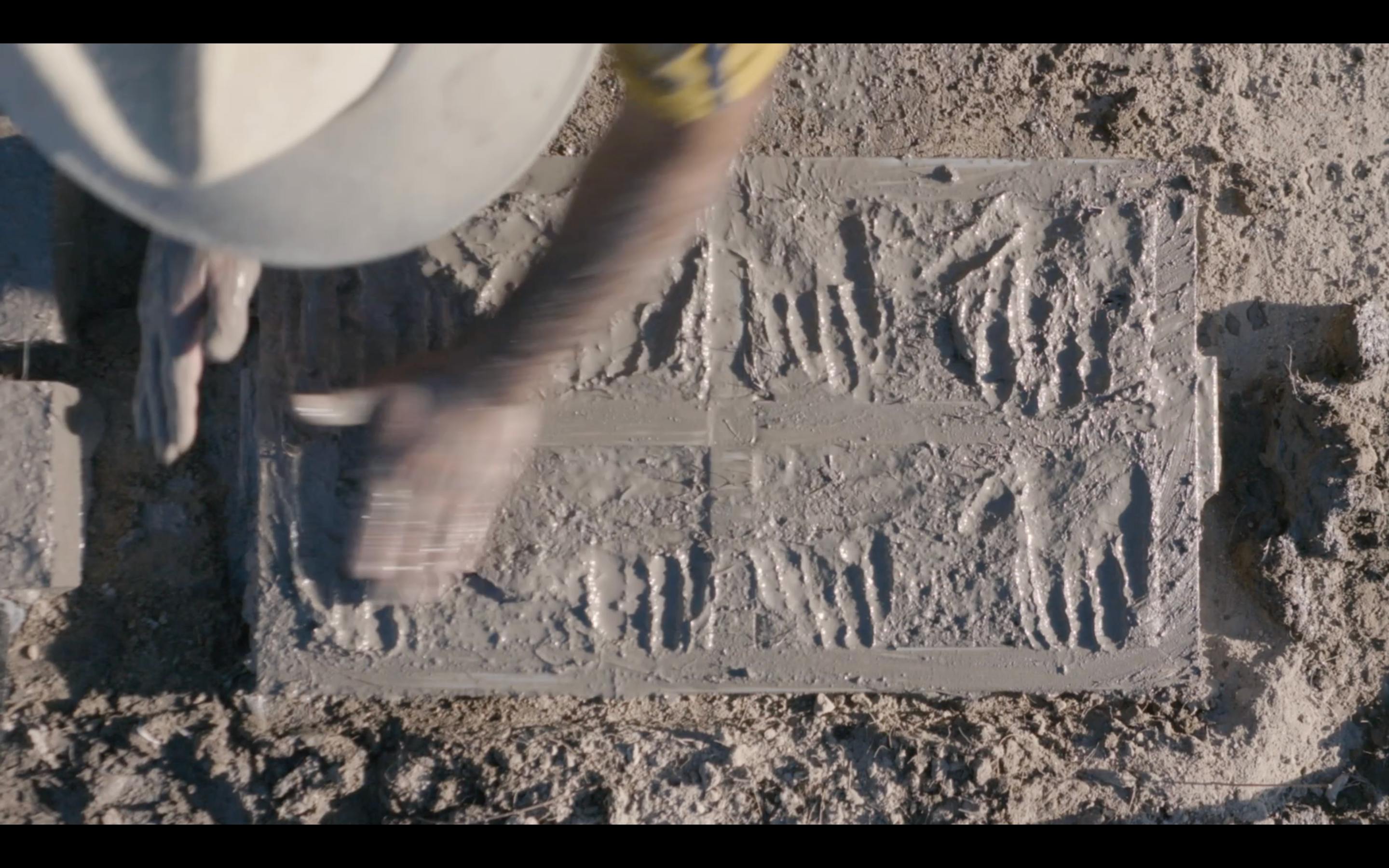
AAP: De esos is a short film made by a sculptor. I was really focused on how people use their hands, their tools, and their materials.
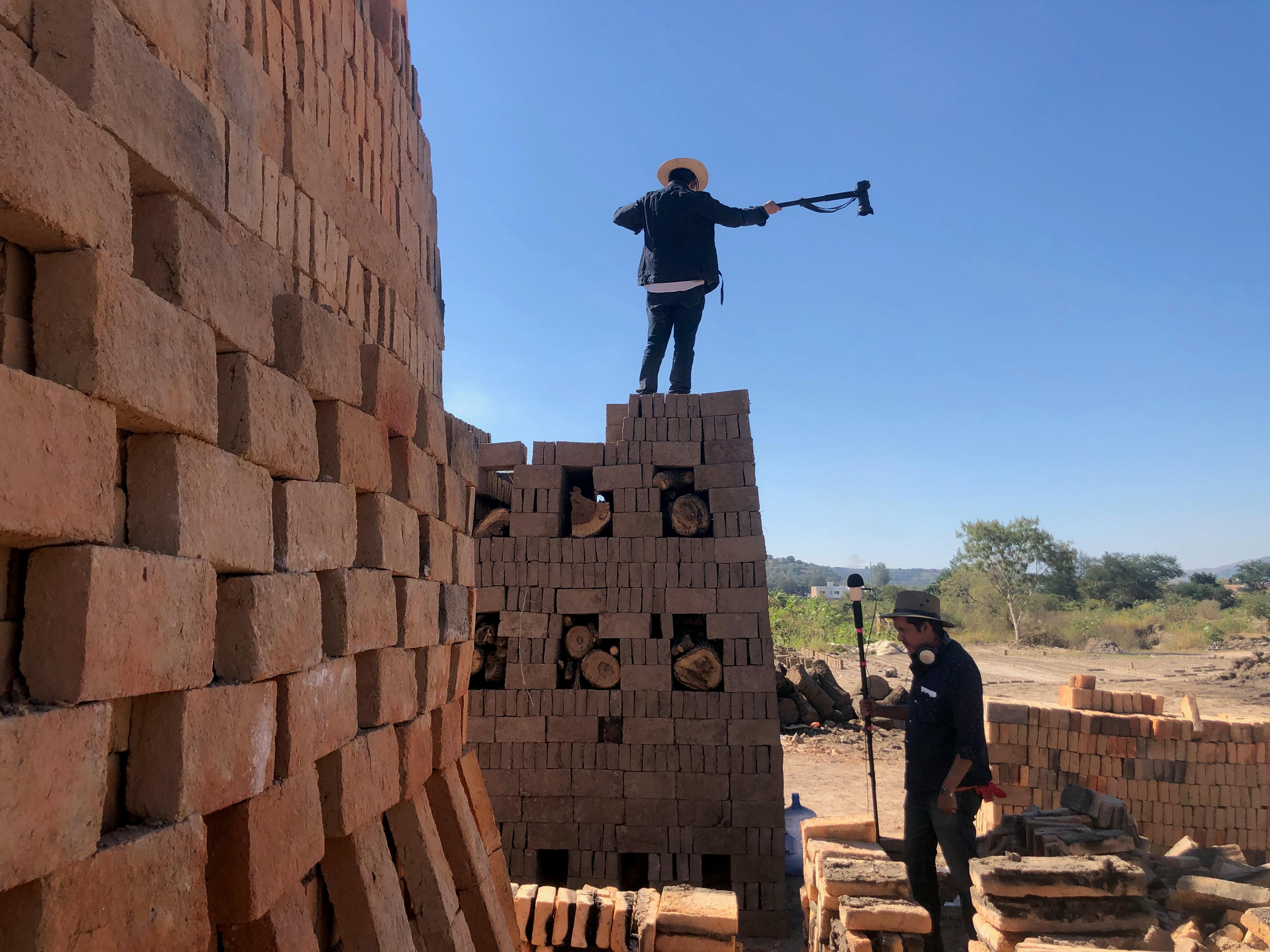
Making a film was a learning experience. I had a crew—four cameras with people that knew what they were doing. My instructions to them were something like: "Really focus on the material. Do steady shots, long shots. Follow a grid. If we're talking about the brick, let's keep everything centered. Kind of follow some lines. Keep it tight." For the first days, they did the shots that I wanted, but suddenly, they just forgot about it. Which was great, because they did what they thought that should be done instead. Many of their shots saved the film. When you're working as an artist, you can be self-centered, but when you're a director, I found that you have to be open, and work as a team.
The hardest part of having a crew was not interfering with the brick makers. We never asked them to act. We were always trying to not be in their way. But they were so generous, too. They were teaching us, just like, "Hey. I can do it better. Pa-pa-pa. Ba-ba-ba. No. Should I do this again?" Making this film was a form of art making different from being in a studio. It involved connecting with people one on one and really taking in this content.


JECC: While we see the final product of a film, there're always all these different layers, moments, and people that are connected to the making of the film.
Something I thought was quite unique was the texture of the film itself. There are these moments when you transition from one moment to the other, these chapter slides that are colorful, the font that you use, and the soundtrack. It's very clear that audio was important for you, and the field recordings that you gathered... You could almost feel them as you're watching the film.
AAP: We tried to be as analog and crafty as we could. The text font was based on handwritten, painted signs we saw all over Magdalena. For the sound, we recorded the songs we listened to on the radio. We put the mic close to the mud.
For the colors between chapters, I knew I wanted to use a color that was involved in the chapter. But during editing, it looked so flat. So I had to retake it, put it in the screen, and then take it through the camera to add a little bit of texture. It feels like you're looking at it exactly as the film. You're a spectator, so you're a spectator of that color.

JECC: You're connecting our built environments to these different places. Perhaps it's Magdalena, but perhaps it could be somewhere else. I think it really shows the care you have for the work and for the way these materials are made. It really comes across through your film. Any final thoughts before we wrap up our conversation?
AAP: I think it's great to know where the things that surround you come from or how they're made. Knowing this makes you a more responsible person able to see all the consequences you have. It's crucial to understand the life of the objects that surround us.